Booster Pump Installation adds a properly sized pump for homes or properties needing more water pressure; pump capacity and electrical work shape the typical $1,000–$3,500 range.
Can a Grundfos Booster Pump Fix Low Whole-House Pressure?
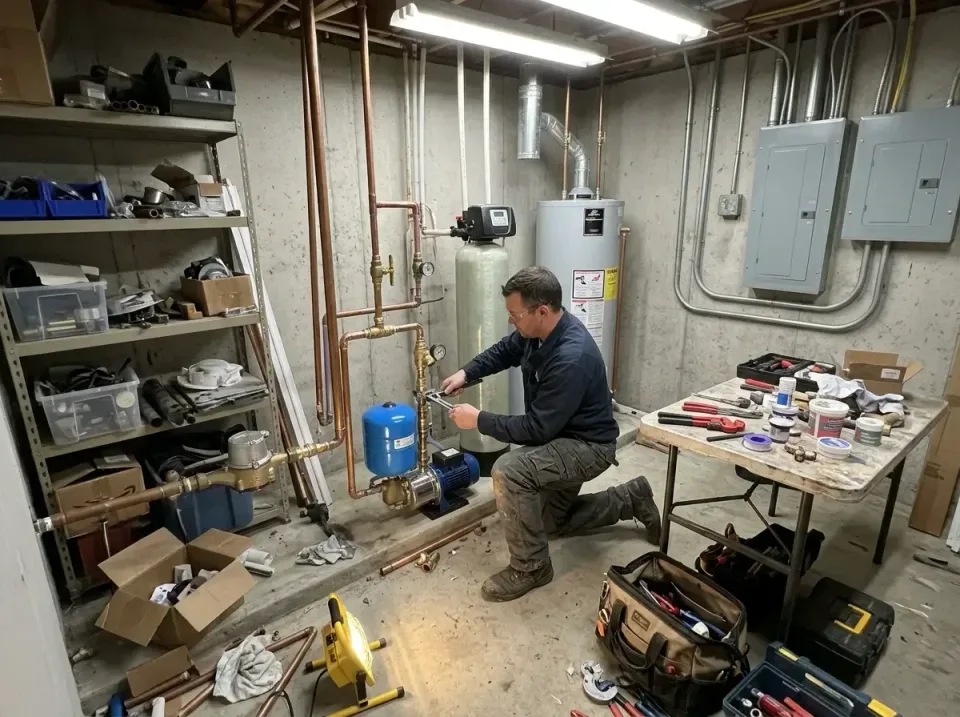
Can a Grundfos Pump Fix Low Whole-House Pressure?
A Grundfos booster pump can help when the water supply reaches the home but cannot maintain useful pressure throughout the house. It will not fix every cause, so the first step is finding where pressure is being lost.
If only one faucet has weak flow, a local blockage is more likely than a whole-house pump problem; an impeller issue can also keep a booster from moving water as intended. Detroit freeze-thaw cycles can stress exposed and buried plumbing, so a sudden change deserves a look beyond the pump.
We start by checking the symptoms and the system before recommending Booster Pump Installation. Around the Detroit Riverwalk, our Michigan crew can assess the setup, explain options, and proceed only with your approval.
When Can a Booster Pump Help the Whole House?
A booster pump raises pressure after water enters a building, which can help when the incoming supply is consistently weak and the existing pipes, valves, and equipment are not restricting flow. It is not a cure for every low-pressure complaint. A partly closed main valve, leaking line, or failing well equipment can leave the house struggling even with a new pump added.
The useful distinction is whether the problem affects several fixtures or just one. When an upstairs sink and shower both lose flow, we look at the supply and distribution path; if one fixture alone is weak, replacing or adding a house-wide pump may spend money without fixing that fixture.
We also check how pressure behaves as several taps run. At homes near Eastern Market, Detroit, our crew documents the findings before recommending equipment, rather than sizing a pump from a symptom alone.
What Can Grundfos Equipment Change?
A booster pump can raise available pressure, but its capacity has to suit the home’s expected use. Grundfos traces its founding to Poul Due Jensen in 1945; for a homeowner, the practical point is that the brand name does not replace correct selection, setup, or maintenance. A variable-speed motor can adjust output as demand changes, which may help the system respond as fixtures open and close.
Pressure tank and pump coordination matters on well systems. If the tank or controls are not working properly, adding a booster can mask symptoms or put more strain on equipment that needs repair first.
For homeowners also wondering how to tell if a well pump is failing, we inspect the related system before proposing an add-on. Pump trouble can show up as inconsistent supply or repeated cycling, so the full setup not just the pump label needs attention.
When Should You Call a Pro Instead of DIY?
You can clean a fixture screen or confirm that an accessible shutoff is fully open. Stop there if the issue affects multiple fixtures, involves electrical connections, or requires changes to water piping. A homeowner cannot safely establish a booster’s suitability just by comparing brand names; the pump must fit actual demand and the existing system.
Our Water Pressure Diagnosis starts with a site check and clear explanation of the likely cause. We then discuss whether a pump, repair, or another correction makes sense.
For Detroit-area work, a Michigan-licensed master plumber can explain the job and any applicable local permit steps before work begins. We protect the home during service and do only the work the customer authorizes.
What Can Make a Pump Installation Cost More?
A straightforward location with suitable connections differs from a job that needs added electrical access, piping changes, or difficult equipment access. We explain the scope before starting; the final quote varies by scope, equipment, access, and site conditions.
Packaging from pump replacement also deserves a plan. We remove or stage discarded packing and equipment so it does not obstruct a walkway or work area, and we make pickup arrangements clear before the job.
That small detail is easy to miss when planning a pump change, but it helps keep the work area orderly. Our Booster Pump Installation process includes discussing access, equipment placement, and what the proposed work involves before you approve it.
Which Repair Fits Your Pressure Problem?
The right fix depends on whether the weakness starts at the supply, the pump system, or one part of the plumbing. Michigan freeze-thaw cycles can stress lines, so testing helps distinguish a pump need from a pipe restriction.
| Option | Best for | Key detail |
|---|---|---|
| Municipal supply repair | Homes fed from a street main | Check pressure as fixtures run; public supply and private plumbing are different parts of the system. |
| Private well pressure repair | Homes using an on-site pump | Review pump cycling and tank precharge before adding equipment. |
| Pressure regulator repair | Excessive or restricted incoming pressure | A regulator controls incoming pressure; a booster increases it. |
| Booster pump installation | Confirmed low supply pressure throughout the home | Select capacity for the home’s flow demand and needed pressure gain. |
| Pressure tank replacement | A well system with tank or cycling problems | Tank supports drawdown; the pump moves water. |
How to Prepare for a Booster Pump Assessment
A useful visit starts with access to the equipment and a clear account of which fixtures lose flow. Detroit-area freeze-thaw conditions can complicate outdoor access, so mention any snow-covered service area when arranging the appointment.
-
Locate the main shutoff: Find it before the appointment so you can point it out without searching during a repair.
-
Clear the work area: Make room around the meter, regulator, or well equipment and protect nearby belongings.
-
Describe the symptoms: Note which fixtures are affected and whether the problem changes when other taps run.
-
Allow electrical checks: A technician may use a clamp meter to test pump electrical operation; keep access to the equipment clear.
-
Review system settings: The pressure switch starts and stops a well pump, so share any known settings rather than adjusting them yourself.
-
Discuss the air charge: A pressure tank’s air charge affects how the system operates; checking it requires proper preparation, not guesswork.
-
Confirm the plan: Review the diagnosis and proposed work before authorizing installation or repair.
Common Questions About Low Water Pressure Repair in Michigan
Can Booster Pump Installation Help If a Frozen Service Line Is Lowering Pressure?
No, a booster is not the first fix for a frozen service line, which can restrict household water before it reaches the pump. In Michigan, hard freezes can burst uninsulated plumbing, so have the line and surrounding system assessed before adding equipment.
How Much Does Booster Pump Installation Cost for Low Whole-House Pressure?
Booster pump installation is estimated at $1,000–$3,500, with pump capacity and electrical work affecting the project scope. Michigan Plumbing Pros can first perform pressure diagnosis, then explain the recommended work and quote before you authorize it.
Should I Install a Grundfos Booster Myself If Upstairs Sinks Barely Produce Water?
No, not before confirming that the cause is low supply pressure rather than a restriction or another system fault. If several fixtures are affected, Michigan Plumbing Pros can check the whole-house setup and explain when professional work is appropriate.
Does a Grundfos Booster Pump Installation in Detroit Need a Permit?
A permit may apply depending on the work, and Detroit plumbing permits are handled through the Buildings, Safety Engineering, and Environmental Department. Michigan Plumbing Code, 2021 edition, is relevant to plumbing work; confirm applicable permit requirements with the local enforcing agency.
Do I Need Pressure Tank Repair If My Well Pump Cycles Every Few Minutes?
Possibly; frequent cycling can point to a pressure-tank or control problem that should be evaluated before installing a booster. Severe thunderstorms can interrupt power to Michigan well pumps, so note whether the issue began after an outage and ask for a system check.
Get a Clear Answer on Whole-House Pressure
A carefully matched booster can improve pressure when the supply is the problem, but equipment should not be selected before the whole-house plumbing system is checked. In Michigan, frozen service lines may reduce household pressure, so a wintertime drop can call for line troubleshooting instead of a pump.
Keep access around the pressure tank clear, especially if well-system pressure troubleshooting is needed. A booster is a poor substitute for fixing a restriction, leak, or failing component.
Our crew explains what we find and lays out repair choices before work begins. For a measured assessment, contact Michigan Plumbing Pros about Booster Pump Installation; we will explain the next step and complete only the work you authorize.
Services Offered
Services We Offer in Detroit, MI
Explore related services available in Detroit, MI.
Water Pressure Diagnosis compares static and flowing readings for Michigan homes; a typical visit is $100–$300, with access and testing scope affecting the cost.
Sudden pressure loss repair covers abrupt whole-home flow drops, including accessible supply-line and pressure-control faults. Typical repairs run $300–$2,000, depending on leak location and excavation.
We repair or replace residential pressure regulators, including valve sizing and connection work; typical jobs run $250–$700 depending on valve size and labor.
Well pressure service checks the pump, switch, tank, and piping; tank size and piping changes affect repair scope.
We trace weak hot-water flow in homes, checking heater connections and accessible pipe runs; typical service runs $150–$500, depending on access and the restriction.
Whole-house pressure repair for homeowners and property managers includes tracing shared-line problems and checking accessible connections; scope and access shape typical costs, often around $300–$2,000.
Well pump repair for homeowners covers pump and control faults; typical repairs run about $250–$900, depending on access and parts needed.
We repair or replace residential well pressure tanks, including bladder and connection issues; typical jobs run $450–$1,300, depending on tank size and piping access.
Frozen Pipe Repair finds and restores frozen residential lines, including hard-to-reach pipe sections; typical repairs run $200–$1,000, depending on access and damage.
We trace weak cold-water flow at fixtures and supply lines; access, pipe material, and repair scope shape the job cost.
Main shutoff repair for homeowners includes valve access and replacement; typical jobs run $300–$800, depending on valve size and access.
We clean, repair, or replace faucet aerators for homeowners, including mineral debris in small screens; typical service runs $75–$200 depending on access and parts.
We replace corroded residential water-pipe sections, including accessible galvanized steel, with scope and access shaping typical $500–$3,000 job costs.
Clogged water line repair clears restricted residential lines; excavation and blockage location affect typical $300–$2,000 repair costs. We serve Michigan homes near Downtown Flint and Ann Arbor.
We clean, repair, or replace showerheads for Michigan homeowners, including accessible fixture connections; typical jobs run $125–$350 depending on access and parts.
Cities & Towns
Service Areas in Detroit
Select a city to find local low water pressure repair providers we cover in Detroit.
Ionia, MI48846Bath, MI48808Blissfield, MI49228South Monroe, MI48161Belleville, MI48111Ludington, MI49431Grand Haven, MI49456Comstock Northwest, MI49048Brighton, MI48116South Rockwood, MI48179Ypsilanti, MI48198Benton Heights, MI49022Beecher, MI48505Saline, MI48176West Branch, MI48661Walled Lake, MI48390Jonesville, MI49250Tecumseh, MI49286West Ishpeming, MI49849Warren, MI48093Oak Park, MI48237Parchment, MI49004Kalkaska, MI49646Shields, MI48609
Show all 300 cities
Farmington, MI48335Vandercook Lake, MI49203Hudson, MI49247Whitehall, MI49461Jenison, MI49428Davison, MI48423Essexville, MI48732Vicksburg, MI49097Traverse City, MI49684Clio, MI48420Yale, MI48097Cadillac, MI49601Wixom, MI48393Corunna, MI48817Norway, MI49870Gladstone, MI49837Romulus, MI48242Trenton, MI48183Norton Shores, MI49441Edgemont Park, MI48917Oxford, MI48371Pontiac, MI48342Milan, MI48160Michigan Center, MI49254Lansing, MI48933New Haven, MI48048
Get a Quote
Get a Low Water Pressure Repair Quote in Detroit, MI
Share job details below or call our team directly. Phone: (877) 773-0781